
About the Tonal Research Lab
The Tonal Research Lab works at the intersection of artificial intelligence, computer vision, and biomechanics to advance the science of how people move and perform.
Our Research
Human movement contains an extraordinary amount of information.
We study how patterns of motion and performance can reveal technique, capability, fatigue, adaptation, and progress.
Our aim is to convert these signals into intelligence:
a deeper, more useful understanding of the individual that can support smarter training decisions and personalized guidance.
Areas of research include:
Computer Vision: Multi-camera pose fusion, motion and form classification.
Multimodal Sensor Foundation Models: Foundation modeling on motion, pose, and textual data. Fatigue and injury detection.
Coaching and Skill Acquisition: How and when to give feedback for optimal performance improvement.
Biomechanical Models: Force and moment propagation through joints and muscles.
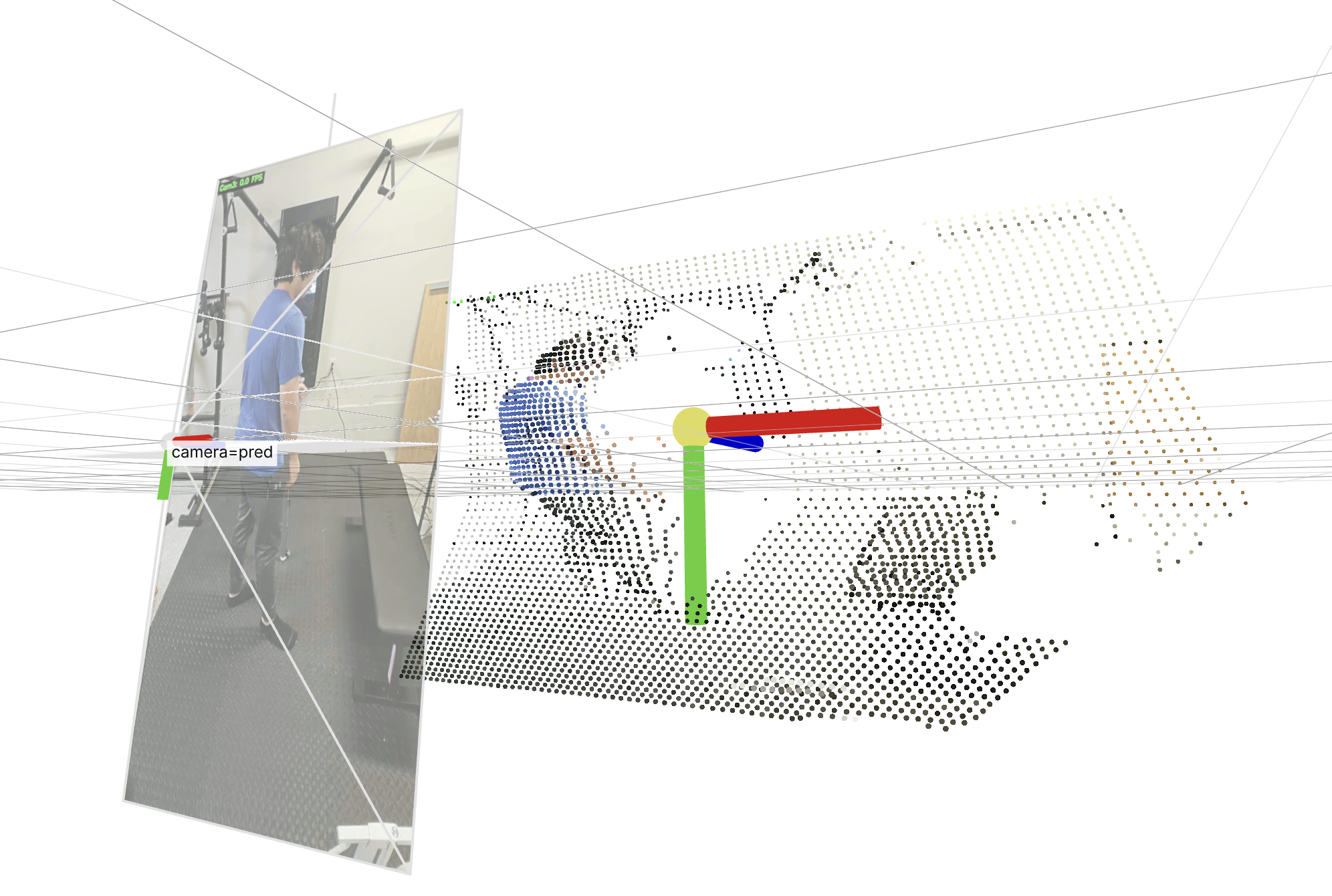
Inside the Lab
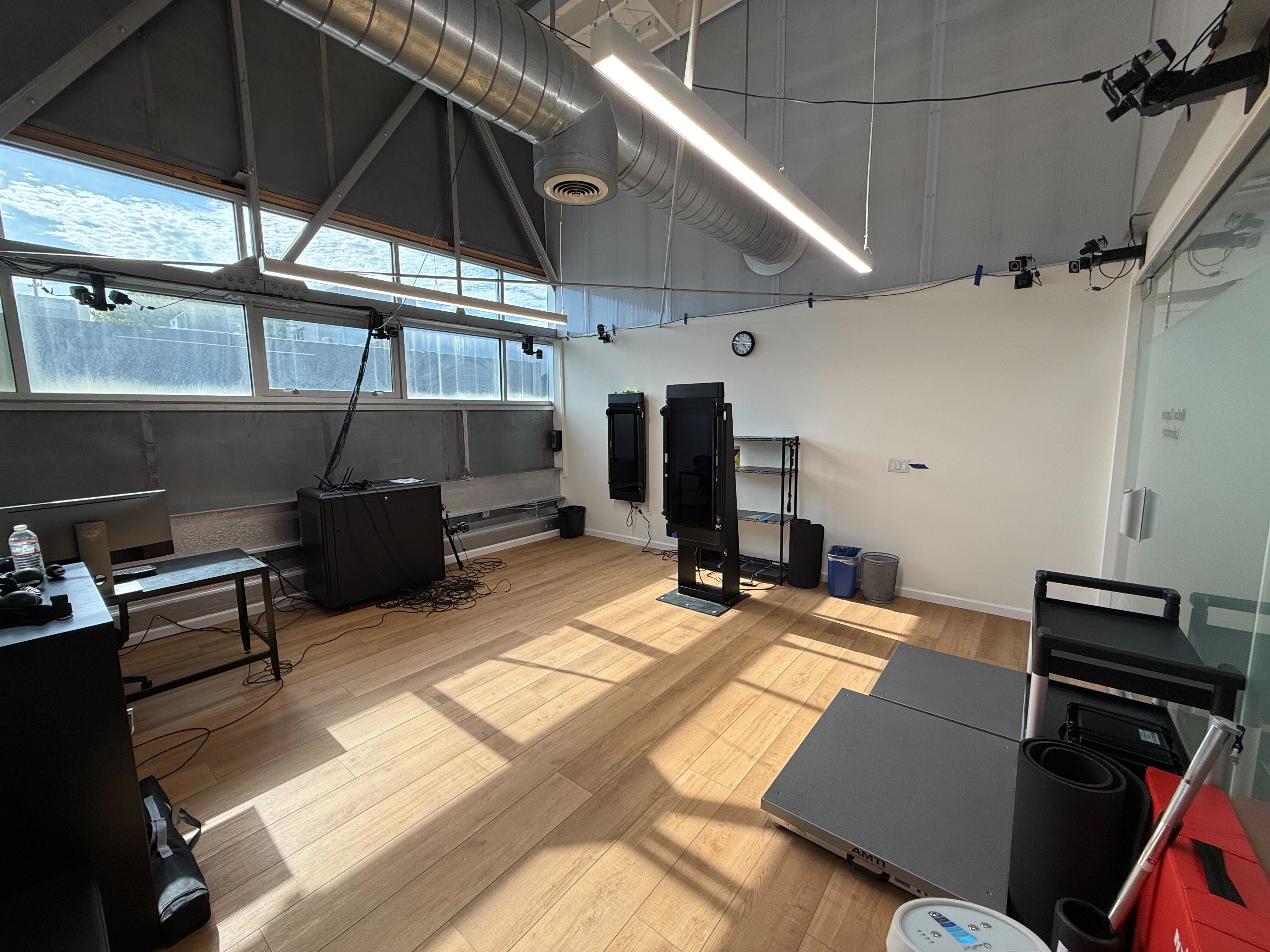
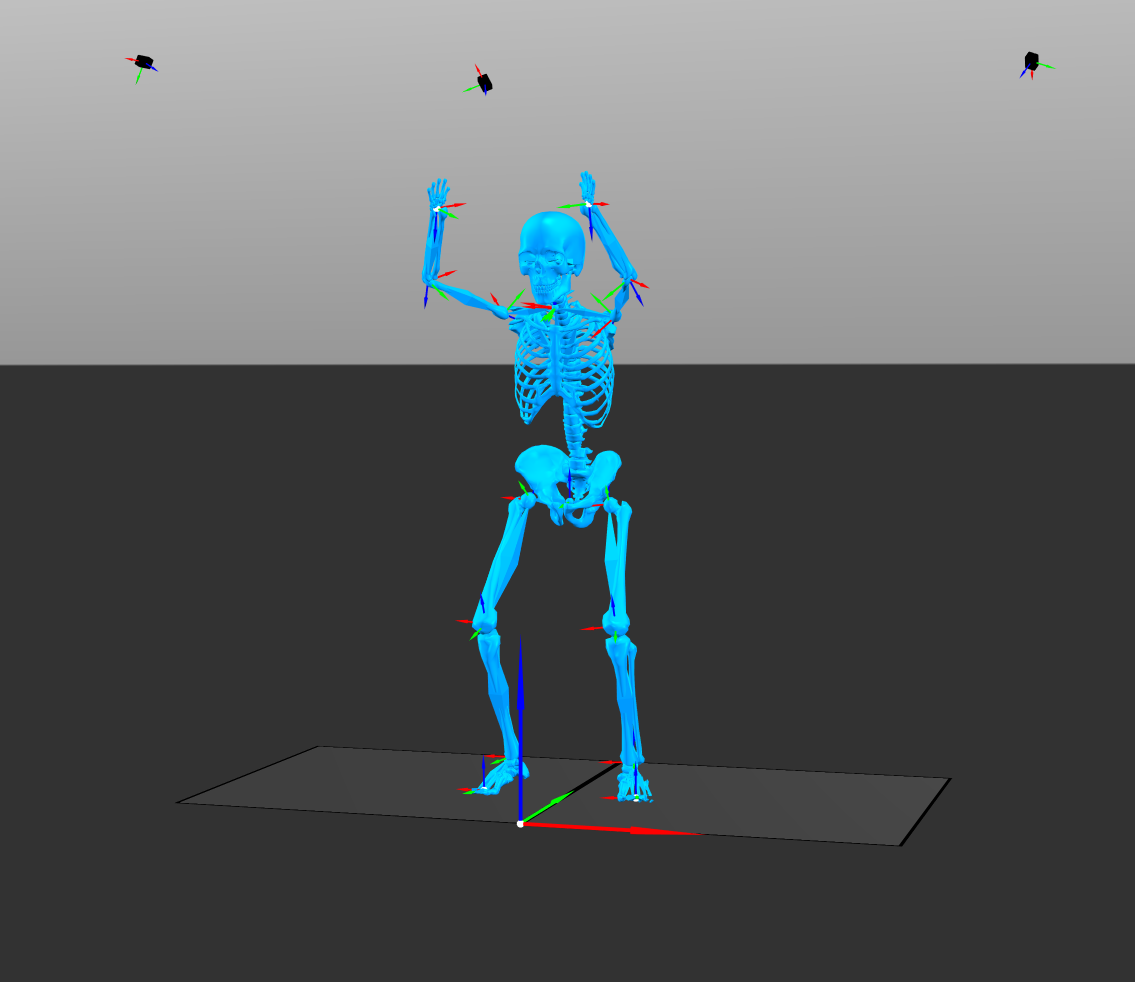
Our purpose-built motion capture laboratory lives at our San Francisco headquarters. Tonal trainers are measured by a twenty camera Vicon rig: twelve optoelectronic cameras tracking body markers and eight synchronized RGB cameras. Ground reaction forces are captured by dual force plates. We also use electromyography (EMG) sensors to measure muscle electrical activity as well as force transducers that we attach to Tonal's cables. We run marker-based and markerless capture side by side, and this is where we collect the ground truth that powers our research and modeling.
Using this data, we tune and validate what the trainer's sensors measure, benchmark our pose estimation, and feeds biomechanical simulations that generate data for training our models. This work helps us ensure that the data we collect at scale from our residential fleet is accurate.
During data collecton, a volunteer trains on the Tonal while all our measurement systems record at once: marker coordinates from 12 angles, video from 8 angles, ground reaction forces, muscle activity, force data, as well as the trainer's cable telemetry, camera, and our Tonal app's Smartview camera. We examine human motion from all sensor streams simultaneously, making it possible to align and refine our systems.
Running marker-based and markerless capture together is a key point of this arrangement. Marker-based capture is the reference standard but requires a lab. We use that golden dataset in order to calibrate our markerless on-Tonal and mobile systems. Measuring one against the other tells us where our pose estimation is accurate enough to use and where it still needs work.
Captured motion drives musculoskeletal simulations that estimate joint angles and internal loads we cannot observe directly, and those simulations in turn generate labeled real and synthetic movement we can train on: body types, tempos, and movement variations.
This data feeds into our modeling work, where we develop a variety of physiologically informed systems, including foundation models, trained to deeply understand human motion and strength training. Our lab instrument is the Tonal trainer itself: a precision digital strength training device in hundreds of thousands of homes, measuring cable force and position, streaming real-time video for pose estimation, and syncing with heart rate monitors and wearables. Together they produce the world's largest strength physiology dataset.
The Team
-

Josh Shapiro
Head of Applied Research. Foundation models.
-

Lauren Benson, PhD
Runs the motion capture laboratory. Biomechanics, wearables, and injuries.
-

Amery Cong
Perception and human motion.
-
Steven Hirsch, PhD
Team manager: Sensors & Intelligence. Biomechanics and computer vision.
-
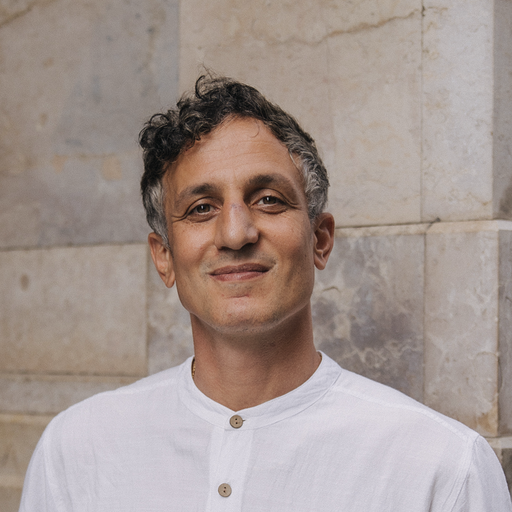
Giuseppe Barbalinardo, PhD
VP of Data Science & AI